
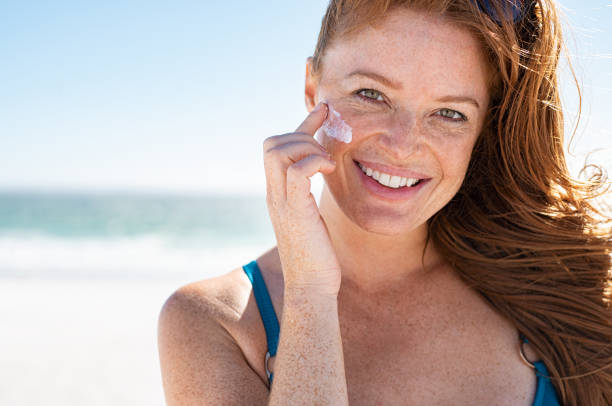
Body Sunscreen Mistakes: Why You Are Still Getting Burned Even With SPF 50
Key Takeaways
- Sunscreen fails on the body when it is applied too thinly, not reapplied after sweating or swimming, or used in a lower SPF than the exposure requires.
- The correct application amount is 1 ounce (a shot glass) for the entire body in a swimsuit. Most people apply 25 to 50 percent of that amount.
- Reapply every 80 minutes when swimming or sweating. Reapply every 2 hours when dry.
- Water-resistant sunscreen is not waterproof. It loses effectiveness after 40 to 80 minutes in water.
Body sunscreen is one of the most misused skincare products. Users apply SPF 50 on the beach, spend three hours in the sun, and come home sunburned. The sunscreen did not fail. The application did. Sunscreen is tested at a specific application density of 2 milligrams per square centimeter. That density produces the labeled SPF. Most people apply 0.5 to 1 milligram per square centimeter, which is 25 to 50 percent of the tested density. The actual SPF is the square root of the labeled SPF at that application density. SPF 50 applied at half density is SPF 7. SPF 30 applied at half density is SPF 5.5. Those numbers explain why sunburns happen with high-SPF products.
The second mistake is frequency. Sunscreen degrades with UV exposure, sweat, and water. It needs to be reapplied every 80 minutes in water or when sweating heavily. It needs to be reapplied every 2 hours when dry. A single application in the morning does not protect through a beach day or a hike.
The Correct Application Amount
The correct amount of sunscreen for the entire body in a swimsuit is 1 ounce, or 30 milliliters. That is the volume of a standard shot glass. Most people apply one-third to one-half of that amount. The result is coverage that is 50 to 70 percent thinner than the tested density. The sunscreen is not effective at that density.
To apply correctly:
- Apply to dry skin 15 to 30 minutes before sun exposure.
- Use enough to cover the entire body. A shot glass full.
- Focus on high-exposure areas: shoulders, back, chest, and the back of the legs.
- Do not forget the ears, the back of the neck, and the tops of the feet.
- Rub in thoroughly. Do not leave streaks or white cast.
Water-Resistant vs. Waterproof
Sunscreen labels say water-resistant, not waterproof. Water-resistant sunscreen maintains its SPF for 40 or 80 minutes in water, depending on the label. After that time, the sunscreen washes off and the SPF drops to near zero.
Water-resistant 40 minutes: Appropriate for light swimming or sweating. Reapply after 40 minutes in water.
Water-resistant 80 minutes: Appropriate for swimming or heavy sweating. Reapply after 80 minutes in water.
Waterproof: No sunscreen is waterproof. The term is not allowed on sunscreen labels in the United States or the European Union. If a label says waterproof, it is marketing, not a regulated claim.
After swimming, towel dry and reapply immediately. The towel removes 50 to 80 percent of the sunscreen. Reapply even if the label says water-resistant.
Chemical vs. Mineral Sunscreen for the Body
Both chemical and mineral sunscreens work when applied correctly. The choice depends on personal preference, skin type, and activity level.
Chemical sunscreens: Absorb UV radiation and convert it to heat. They are thinner, easier to apply, and do not leave a white cast. They need 15 to 30 minutes to bind to the skin before sun exposure. They can cause irritation on sensitive skin. Common active ingredients: avobenzone, octocrylene, bemotrizinol, bisoctrizole.
Mineral sunscreens: Reflect UV radiation off the skin surface. They work immediately upon application. They are better for sensitive skin and for children. They can leave a white cast on darker skin. Common active ingredients: zinc oxide, titanium dioxide.
For body use, chemical sunscreens are easier to apply over large areas. Mineral sunscreens are better for the face and for sensitive areas. A combination approach works well: mineral on the face, chemical on the body.
Common Body Areas That Get Missed
The most commonly missed areas are the back, the ears, the back of the neck, and the tops of the feet. These areas are easy to reach and easy to forget.
Back: Ask someone to apply sunscreen to your back, or use a spray sunscreen. Spray sunscreens are less accurate than lotions but better than no sunscreen on hard-to-reach areas.
Ears: The tops and backs of the ears are high-exposure areas that are often missed. Apply sunscreen to all surfaces of the ears.
Back of the neck: The hairline leaves the back of the neck exposed. Apply sunscreen to the entire neck, including the hairline area.
Tops of the feet: Sandals and flip-flops leave the tops of the feet exposed. Apply sunscreen to the tops of the feet, between the toes, and around the ankles.
Lips: The lips have no melanin and burn easily. Use a lip balm with SPF 30 or higher.
Sunscreen and Skincare Integration
Sunscreen is the last step in the morning skincare routine. It should be applied after moisturizer and before makeup.
Moisturizer first: Apply a lightweight, non-comedogenic moisturizer. The moisturizer hydrates the skin and prepares it for sunscreen.
Sunscreen second: Apply 1 ounce of sunscreen to the entire body and 1/4 teaspoon to the face. Rub in thoroughly.
Makeup third: Apply makeup over sunscreen. Some makeup products contain SPF, but they do not provide enough coverage on their own. Use them as an extra layer, not as a replacement for sunscreen.
Reapply throughout the day: Reapply sunscreen every 2 hours when dry and every 80 minutes in water or when sweating. Use a spray or a stick for reapplication over makeup.
Frequently Asked Questions
Does a higher SPF mean I can stay in the sun longer?
No. SPF is a measure of UVB protection, not time. SPF 30 blocks 97 percent of UVB rays. SPF 50 blocks 98 percent. The difference is 1 percent. Higher SPF provides marginally better protection but does not mean you can stay in the sun longer. Reapplication frequency matters more than SPF number.
Is SPF in makeup enough?
No. Foundation with SPF 15 provides SPF 15 protection only if you apply 1/4 teaspoon of foundation to your face. Most people apply much less. Use SPF makeup as an extra layer, not as a replacement for sunscreen.
Can I use last year''s sunscreen?
Check the expiration date. Sunscreen loses effectiveness over time. Chemical sunscreens degrade faster than mineral sunscreens. If the sunscreen is past its expiration date or has changed color or smell, replace it.
Do I need sunscreen on cloudy days?
Yes. Up to 80 percent of UV radiation penetrates clouds. Sunscreen is necessary regardless of cloud cover.
Body sunscreen works when it is applied in the correct amount, reapplied at the correct frequency, and used on all exposed areas. SPF 50 applied thinly is less effective than SPF 30 applied correctly. Quantity and frequency matter more than the number.