
Niacinamide Flushing Is Not an Allergy: Why Your Serum Burns and How to Calm It in 5 Minutes
Key Takeaways
- Niacinamide flushing is a harmless vascular response, not an allergic reaction, and usually subsides within 20 to 30 minutes.
- Concentration above 5 percent, pH shifts, and compromised barriers increase the likelihood of flushing.
- Layering a ceramide or panthenol moisturizer before niacinamide and keeping concentrations between 2 percent and 5 percent reduces the reaction for most people.
- Cold compress application for 3 to 5 minutes right after application speeds resolution without compromising results.
Niacinamide sits on more skincare ingredient labels than almost any other active, and that visibility has created a misunderstanding: when your face turns red and warm after using it, you probably assume you are allergic. The reaction is called flushing, and it is not an IgE-mediated allergy. It is a transient vasodilation response that affects a meaningful share of users, especially when concentrations climb above 5 percent or the skin barrier is already compromised. If you have ever abandoned a promising serum because of that prickling heat, the issue is not the ingredient itself. It is how it is formulated, layered, and matched to your current skin state.
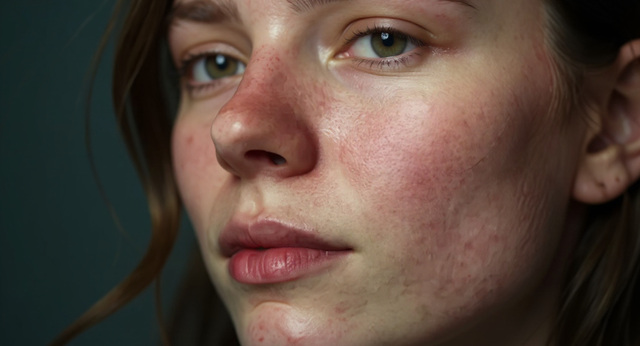
What is really happening: Niacinamide converts to niacin in the presence of heat, acidic pH, or water, and niacin triggers the production of prostaglandins that dilate capillaries. The result is redness, warmth, and sometimes a mild stinging sensation. No histamine release. No hives. No swelling beyond the surface flush.
Why Niacinamide Causes Flushing
Niacinamide flushing follows a biochemical pathway that is well documented in dermatology literature. When nicotinamide encounters acidic environments or converts to free niacin through hydrolysis, it stimulates the release of prostaglandin D2 and E2 from keratinocytes and dermal mast cells. Those prostaglandins relax smooth muscle around superficial capillaries, increasing blood flow and producing the characteristic red warmth. The response is dose-dependent: studies show that oral niacin at doses above 30 milligrams reliably produces flushing, while topical concentrations between 2 percent and 5 percent produce it in a smaller but still notable subset of users.
Formulation variables matter as much as concentration. Serums that pair niacinamide with alpha hydroxy acids or vitamin C in acidic pH ranges increase the conversion rate from niacinamide to niacin. Products that sit in clear packaging under direct light degrade faster, accumulating free niacin before they reach your cabinet. Water-heavy gels also hydrolyze niacinamide more quickly than anhydrous oils or balms. If you buy a gel serum in a translucent bottle and apply it over a glycolic acid toner, you are stacking triggers, not skincare.
How to Differentiate Flushing From a True Allergy
Flushing and allergic contact dermatitis look different, and mistaking one for the other leads to unnecessary abandonment of a useful ingredient. True allergic reactions to niacinamide are exceedingly rare in peer-reviewed literature. Most reports of "niacinamide allergy" are actually irritant responses from over-concentrated formulas applied to already damaged skin barriers. A true contact allergy to niacinamide would produce delayed-type hypersensitivity: redness, swelling, vesicle formation, and itching that persists or worsens 24 to 48 hours after exposure. Flushing, by contrast, peaks within minutes, stays superficial, and resolves within 20 to 30 minutes without treatment.
The stinging test is a rough but useful differentiator. If the sensation starts immediately, fades within 20 minutes, and leaves no lasting texture change, it is flushing. If the skin feels hot for hours, develops raised bumps, or peels over the next two days, the reaction is irritant or allergic and you should discontinue use and consult a dermatologist.
The Exact Protocol to Stop a Flush in 5 Minutes
When flushing starts, the goal is to constrict the dilated capillaries and remove residual niacin from the skin surface. The steps below work because they interrupt the prostaglandin effect almost immediately.
Step 1: Rinse with cool water for 60 seconds. Do not scrub. A gentle stream from a clean sink flushes residual surface product and lowers skin temperature, slowing the capillary response.
Step 2: Apply a cold compress for 3 to 5 minutes. A clean, chilled metal spoon or a refrigerated silicone mask works better than a cloth, because metal conducts heat away faster. Hold it against the most affected areas without pressing hard.
Step 3: Seal with a ceramide or panthenol moisturizer. This rebuilds the barrier signal that niacinamide is meant to support in the first place. Look for products with ceramide NP, ceramide AP, or panthenol in the first five ingredients.
Step 4: Skip active ingredients for the next 24 hours. Retinoids, exfoliating acids, and Vitamin C derivatives all compete for the same metabolic bandwidth your skin is using to recover.
Step 5: Retry niacinamide at 2 percent concentration, after moisturizer, 48 hours later. The sandwich method applies niacinamide between two layers of barrier-supporting moisturizer rather than on bare skin. This slows absorption enough to prevent the flare while keeping the ingredient effective.
How to Use Niacinamide Without Flushing Long Term
Prevention works better than intervention. Most users who flush consistently can continue using niacinamide by adjusting three variables: concentration, order of application, and vehicle.
Concentration: The sweet spot for most skin types is 2 percent to 5 percent. Clinical evaluation of topical niacinamide for barrier repair and hyperpigmentation consistently uses 2 percent to 4 percent concentrations without significant flushing reports. Products advertising 10 percent niacinamide are leveraging marketing exaggeration, not efficacy evidence. The margin between useful and irritating is narrower at higher concentrations, and flushing is the clearest signal that you have crossed it.
Application order: Apply niacinamide after moisturizer, not before. A damp skin surface increases trans-epidermal delivery, which sounds good until you remember that faster delivery also means more free niacin reaches deeper capillaries. Moisturizer first creates a diffusion barrier that slows penetration to a tolerable rate.
Vehicle: Water-based gels and serums hydrolyze niacinamide faster than creams, oils, and liposomal suspensions. If you flush consistently from a gel, switch to a cream or a niacinamide-boosted moisturizer rather than a standalone serum.
Barrier health: Users with eczema, rosacea, or recent retinoid irritation flush more often from niacinamide because their epidermal barrier is already compromised. Repairing the barrier with ceramides and reducing active exfoliants for two to four weeks often resolves the flushing without dropping niacinamide entirely.
Frequently Asked Questions
Can I build tolerance to niacinamide flushing?
Yes, but only if the flushing is mild. Some users report reduced flushing after two to four weeks of consistent use at a lower concentration. This is likely due to barrier adaptation rather than true desensitization. If flushing persists after concentration and order adjustments, tolerance building is not the right path.
Should I patch test niacinamide?
Patch testing is always reasonable for a new active. Apply a small amount to the inner forearm and wait 24 hours. If flushing occurs but resolves within an hour and leaves no lasting reaction, it is safe to proceed with the sandwich method on the face.
Is niacinamide still effective if I apply it after moisturizer?
Yes. Barrier repair and pore-refining benefits from niacinamide are concentration-dependent over time, not instantly transdermal. A 2 percent to 4 percent cream applied after moisturizer delivers meaningful daily exposure without triggering a flush.
Does niacinamide cause purging?
No. Purging is specific to comedolytic actives such as retinoids and certain exfoliating acids that accelerate cell turnover. Niacinamide does not increase cell turnover, so it does not cause purging. If your skin gets worse after starting niacinamide, the cause is flushing, barrier irritation, or an unrelated product change.
Building a niacinamide routine that respects your barrier is simpler than avoiding the ingredient entirely. Niacinamide remains one of the best-studied, most cost-effective topicals for barrier support, hyperpigmentation, and pore appearance when it is used at evidence-based concentrations and applied in the right order. The flushing that drives users away is a fixable formulation and technique problem, not a reason to abandon a well-supported active.