
Why You Get Ingrown Hairs After Shaving (and the Shaving Habit That Causes Them)
Ingrown hairs come from shaving too close, going against the grain, and skipping exfoliation. Changing the razor and direction fixes most cases.
Published
The Fashion & Beauty Editorial
Lead Editorial Collective · Editor Bio → · How we research →
Our comprehensive library of ingredient breakdowns, product tests, and barrier protocols.
Key Takeaways
- Ingrown hairs happen when a shaved hair grows back into the skin instead of out of the follicle.
- Shaving too close (against the grain, multiple passes) cuts hair below the skin surface.
- Curly and coarse hair is more likely to curve back into the skin.
- Exfoliation before and after shaving releases trapped hairs and prevents new ones.
- A single-blade razor or electric trimmer reduces ingrowns more than any cream.
You shave. Two days later, red bumps appear. They itch. Some become painful. You assume your skin is sensitive. Usually the problem is how you shave, not your skin.
This guide explains why ingrown hairs form, what habits cause them, and how to prevent them.
What an Ingrown Hair Is
An ingrown hair is a hair that grows back into the skin instead of out of the follicle (the pore the hair grows from). The hair pierces the skin from inside, causing inflammation (redness, swelling, and sometimes pus).
Ingrown hairs are also called razor bumps (pseudofolliculitis barbae). They are common on the face, neck, legs, armpits, and bikini area. They are more common in people with curly or coarse hair because the hair naturally curves.
Cause One: Shaving Too Close
The closer the shave, the higher the risk. When you shave against the grain (opposite to hair growth), the razor pulls the hair up and cuts it below the skin surface. The hair retracts into the follicle. As it grows back, it may not find the opening and curves into the skin instead.
Multi-blade razors make this worse. They lift the hair and cut it below the surface (the "lift and cut" design). This gives a closer shave but increases ingrowns.
The fix is to shave with the grain (in the direction hair grows). Use fewer passes. Accept a slightly less close shave. A single-blade razor or electric trimmer cuts hair at the skin surface, not below it. This reduces ingrowns significantly.
Cause Two: Dull Razors
A dull blade drags across the skin. It does not cut cleanly. It pulls and tears the hair, leaving jagged tips. Jagged tips are more likely to grow back into the skin.
Replace your razor blade every 5 to 7 shaves. If the blade tugs or skips, it is dull. A sharp blade cuts cleanly and reduces irritation.
Cause Three: No Exfoliation
Dead skin cells build up over the follicle opening. The hair cannot find its way out and grows sideways under the skin. This is a trapped hair (pseudofolliculitis).
Exfoliate before shaving to remove dead skin and lift trapped hairs. Use a gentle scrub or a soft brush. Exfoliate again 24 hours after shaving to prevent new buildup.
Do not over-exfoliate. Twice a week is enough. Daily exfoliation irritates the skin and worsens ingrowns.
Cause Four: Dry Shaving
Shaving dry skin causes friction. The razor drags instead of gliding. This tears the hair and irritates the skin. Irritated skin swells around the follicle, trapping the hair.
Always wet the skin with warm water for 2 to 3 minutes before shaving. Warm water softens the hair and opens the follicle. Apply a shaving cream or gel. Let it sit for 30 seconds before shaving.
Never dry shave. Even a quick touch-up with a dry razor causes ingrowns.
Cause Five: Pulling the Skin Taut
Stretching the skin while shaving pulls the follicle open. The razor cuts the hair below the surface. When the skin relaxes, the hair retracts into the follicle.
Shave without pulling the skin. Let the skin lie naturally. Use light pressure. Let the razor do the work.
Cause Six: Shaving Direction
Shaving against the grain gives the closest shave but the highest risk of ingrowns. Shaving with the grain gives a less close shave but fewer ingrowns.
If you are prone to ingrowns, shave with the grain only. If you need a closer shave, go across the grain (perpendicular to growth) on the second pass. Never go against the grain if you get ingrowns.
The Right Shaving Routine
- Wet the skin with warm water for 2 to 3 minutes.
- Exfoliate gently with a scrub or brush.
- Apply shaving cream or gel. Let it sit for 30 seconds.
- Shave with the grain using light pressure.
- Rinse the blade after every stroke.
- Rinse with cool water to close the follicles.
- Apply a soothing, alcohol-free after-shave or moisturizer.
Do not shave the same area more than twice. More passes mean more irritation and more ingrowns.
How to Treat an Existing Ingrown Hair
- Do not pick or squeeze. This causes infection and scarring.
- Apply a warm compress for 5 minutes. This softens the skin and may bring the hair to the surface.
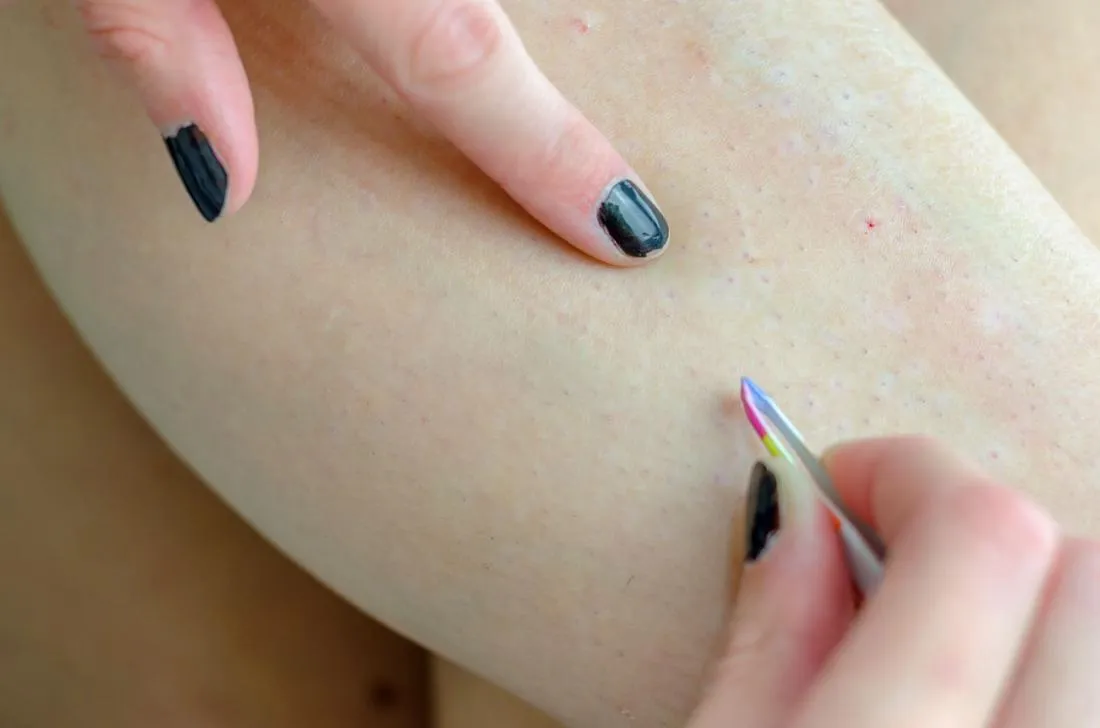
- If the hair is visible, use a sterile needle to gently lift the tip. Do not pull the hair out. Just free the tip so it can grow out.
- Apply an over-the-counter ingrown hair treatment (glycolic acid, salicylic acid, or benzoyl peroxide) to reduce inflammation.
- If the bump is painful, red, or has pus, see a clinician. It may be infected.
Alternative Hair Removal Methods
If shaving causes chronic ingrowns, consider other methods.
- Electric trimmer: cuts hair above the skin surface. No ingrowns. Less close than a razor.
- Waxing: removes hair from the root. Ingrowns are less common but possible. Exfoliate after waxing.
- Depilatory cream: dissolves hair at the surface. No blade. Can irritate sensitive skin.
- Laser hair removal: permanent reduction. Most effective for chronic ingrowns. Requires multiple sessions.
Common Mistakes That Make It Worse
- Shaving against the grain. This is the number one cause of ingrowns.
- Using a multi-blade razor. Switch to single-blade or electric.
- Skipping exfoliation. Dead skin traps hairs.
- Shaving dry. Always wet and use cream.
- Picking at ingrowns. This causes infection and scarring.
- Using a dull blade. Replace every 5 to 7 shaves.
When to See a Clinician
See a dermatologist if ingrowns are frequent, painful, or infected. See one if you have deep bumps that do not heal. See one if you have scarring from picking. A clinician can prescribe topical antibiotics, retinoids, or recommend laser treatment.
Frequently Asked Questions
Can ingrown hairs go away on their own?
Yes. Most ingrowns resolve in 1 to 2 weeks. The hair eventually grows out or the bump shrinks. Do not pick. Let it heal.
Does shaving cream matter?
Yes. Shaving cream softens hair and reduces friction. Gel and foam work. Avoid soap, which dries the skin. Look for creams with glycerin or aloe.
Are some people more prone to ingrowns?
Yes. People with curly or coarse hair are more prone. This is because the hair naturally curves back toward the skin. This is not a flaw. It is genetics. Adjust your shaving technique accordingly.
Does exfoliating after shaving help?
Yes. Exfoliating 24 hours after shaving removes dead skin that could trap new hairs. Use a gentle scrub or chemical exfoliant (glycolic or salicylic acid).
Ingrown hairs are a shaving technique problem, not a skin problem. Shave with the grain, use a sharp single blade, exfoliate, and moisturize. The bumps fade, and smooth skin stays.