
Why Your Barber Gives You a Different Cut Every Time: The Reference and Growth-Pattern Fix
Cuts vary because vague requests leave the barber guessing. A reference photo, clipper guard numbers and naming your cowlick keep each cut the same.
Published · Updated
Marcus Vance
Fabric Longevity & Grooming Editor · Editor Bio → · How we research →
Fast morning routines, beard maintenance, and tested product picks for men.
Key Takeaways
- Requests like "just tidy it up" or "the usual" leave the barber to decide length, shape and neckline from their own habits, and those habits differ between barbers and between visits.
- Clipper guards are numbered by length (a #2 leaves about 1/4 inch, a #4 about 1/2 inch), so a guard number is far more precise than "short" or "not too short."
- Cowlicks and crown swirls change how hair lies as it grows, so naming them lets the barber leave length where the hair needs weight to stay down.
- Seeing the same barber, and showing them photos of your own hair after a cut you liked, is the most reliable way to get the same result twice.
Why does my haircut come out different every time?
Most inconsistent haircuts come from missing information rather than a bad barber. "Short on the sides, a bit off the top" leaves a long list of decisions open: which guard to use, where a fade starts, how the neckline is finished, how much bulk comes out of the top, and whether the front is cut blunt or textured. The barber fills every gap with a personal default. A different barber fills them differently, and even the same barber can make different calls on a busy afternoon.
Your hair also behaves in ways a barber can't see at a glance. A crown that sticks up when it's cut short, a hairline that pushes the fringe to one side, or curls that shrink as they dry can all make a technically identical cut look different on you. If nobody mentions them, each visit produces a slightly different problem.
Three things you control make the result repeatable: a clear reference, a few specific numbers, and a short description of how your hair grows.
How do I tell my barber what I want?
Bring a photo, then describe the cut section by section in the order a barber works. Say it before the clippers come out, because it is much easier to agree on a plan than to correct a cut halfway through.
- Sides and back. Give a clipper guard number, or ask for a scissor cut if you don't want clippers. If you want a fade, say where it should start: low (just above the ears and neckline), mid (around the temples) or high (close to where the head starts to curve toward the top).
- Top. Describe length in inches or finger-widths ("leave about two inches," "take half an inch off") and explain how you style it. Hair worn pushed back is cut differently from hair worn forward or to the side.
- The blend. Say whether you want the sides to flow smoothly into the top or show a clear line between them.
- Neckline. Choose blocked (a straight, squared edge), rounded, or tapered (fading out naturally). A tapered neckline usually grows out more softly.
- Around the ears and sideburns. Say how long the sideburns should be and whether you want a sharp line-up.
- Growth quirks. Point to your cowlick or crown and describe what it does: "This stands up if it's shorter than an inch."
Before the first cut on top, it's reasonable to ask, "Can you show me how much you're taking off?" At the end, ask for the hand mirror and check the back and the crown, not only the front.
What do the clipper guard numbers mean?
Guard numbers are the most useful shorthand you can give, because they leave very little to interpretation. The lengths below are the standard guard sizes most clipper brands follow, though individual models can vary slightly and some brands sell half sizes.
| Guard | Approximate length left | Typical use |
|---|---|---|
| #1 | 1/8 in (3 mm) | Very short sides, lower part of many fades |
| #2 | 1/4 in (6 mm) | Classic short back and sides |
| #3 | 3/8 in (10 mm) | Short sides that still cover the scalp on most hair |
| #4 | 1/2 in (13 mm) | Longer sides, or a short all-over buzz |
| #6 | 3/4 in (19 mm) | Short clipper cut on top |
| #8 | 1 in (25 mm) | Longest standard guard, softer all-over clipper cut |
The same guard can look different from person to person. Dense hair shows less scalp at a #2 than fine or thinning hair does, and the contrast between your hair color and skin tone changes how short it reads, so if a friend's #2 looks right, yours might need a #3. Once you find a number you like, write it down and quote it every time.
Which barber terms should I use?
A few words carry a lot of instruction. Using them correctly removes most of the guesswork.
| Term | What it means | When to ask for it |
|---|---|---|
| Taper | Hair shortens gradually toward the sideburns and neckline, but the sides keep some length | You want a neat cut that grows out gently |
| Fade | Sides and back blend down to very short or bare skin | You want a sharper look and don't mind frequent touch-ups |
| Undercut | Sides cut to one short length with a clear disconnection from the longer top | You want strong contrast |
| Scissor-over-comb | Sides cut with scissors instead of clippers | You want a softer, fuller side profile |
| Texturizing | Bulk removed from the top with point cutting or thinning shears | Your hair looks heavy or puffy on top |
People often ask for a fade when they want a taper. If you want the sides to look tidy but still covered, "a low taper" is the clearer request.
How do I use a reference photo properly?
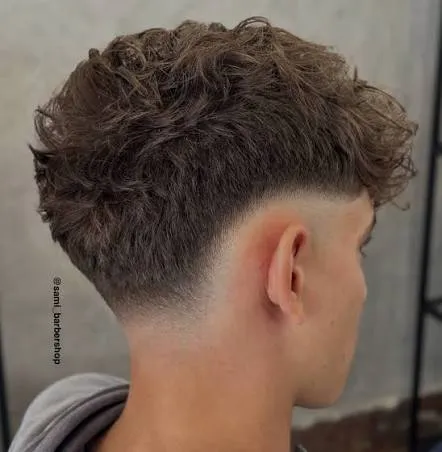
A good reference shows the cut from the front, the side and the back, on someone whose hair is similar to yours in thickness, texture and hairline. A photo of thick, straight hair won't translate to fine, wavy hair, however skilled the barber.
The most accurate reference is your own head. After a cut you like, take photos from the front, side and back, and ask someone to photograph the crown. Next visit, those pictures already account for your density, texture and growth patterns in a way no celebrity photo can.
Say what you like about the photo, too: "the length on top and the low taper, not the beard." Then ask the barber directly whether it will work with your hair. A good barber will tell you if your crown or hairline will fight the style.
Why do cowlicks and crown swirls make cuts inconsistent?
A cowlick is a patch where hair grows in a different direction from the hair around it, most often at the crown or the front hairline. Cut too short, that hair stands straight up. Left a little longer, its own weight helps it lie flat. Some people also have a double crown, with two swirls that pull in different directions.
If the barber doesn't know about these, they'll cut the crown the same length as everything around it and the result can look fine in the chair but odd a week later. Name the problem and suggest the fix: "Leave extra length at the crown," or "My hair naturally parts on the left."
Texture matters too. Curly and wavy hair shrinks as it dries, so length cut wet can look much shorter once dry. Tell the barber if your hair curls; many will leave extra length or cut it dry.
Why does my haircut look different a week later?
Short lengths show regrowth fastest. A skin fade loses its sharp gradient quickly, the neckline fills in, and the outline around the ears softens. Longer scissor cuts change more slowly. If your cut always looks right on day one and wrong by week two, you may simply need shorter intervals between visits, or a softer taper that grows out gracefully.
For very short styles, a light tidy at home can bridge the gap; see keeping a buzz cut sharp between barber visits and why a buzz cut can look uneven after a week. Styling product changes the look as well, so it's worth matching clay, pomade or texture powder to your hair before blaming the cut.
Why does sticking with one barber help?
A barber who has cut your hair several times already knows your cowlick, your preferred length and how your hair grows out. That knowledge is hard to transfer, which is why switching barbers so often produces a different result. If you do need to switch, bring your photos and your guard numbers, and give the new barber the same section-by-section description.
Frequently Asked Questions
What should I say to a barber for my first visit?
Start with a photo, then describe the sides, top and neckline separately. Give a guard number for the sides if you know it, a length in inches for the top, and explain how you usually style it. Mention any cowlick or crown swirl and ask the barber whether the style suits your hair. Finish by asking to see the back in a mirror before you leave.
Is it rude to bring a photo to the barber?
No. Most barbers prefer it, because a picture settles questions that words can't, such as how short "short" means to you. Show several angles if you can, and say which parts of the photo matter. Be ready to hear that some details won't work on your hair type; that honesty usually leads to a better cut than copying the photo exactly.
Should I ask for guard numbers or inches?
Use guard numbers for clipper work on the sides and back, and inches or finger-widths for the top, which is usually cut with scissors. Guard numbers are the more precise of the two because they correspond to a fixed length. If you don't know your number, ask the barber which guard they used at the end of a cut you liked, and note it on your phone.
What if I don't like the cut?
Speak up while you're still in the chair, because adjustments are easiest then. Be specific: "the sides feel too high" is more useful than "it doesn't look right." If you notice a problem after getting home, many shops are happy to adjust a cut within a few days if you call politely. Hair that is already too short can only be fixed by waiting.
A barber gives you a different cut each time when the request is vague and your hair's quirks go unmentioned. Bring photos of your own hair, quote guard numbers, name your cowlick, and stay with one barber, and the cut stops changing.