
Why Your Hair Is Thinning (and the DHT Problem)
Hair thinning in men is caused by DHT (dihydrotestosterone). It shrinks hair follicles over time. Minoxidil and finasteride slow progression.
Published
Marcus Vance
Fabric Longevity & Grooming Editor · Editor Bio → · How we research →
Fast morning routines, beard maintenance, and tested product picks for men.
Key Takeaways
- Hair thinning in men is caused by DHT (dihydrotestosterone). It shrinks hair follicles over time.
- DHT binds to receptors in hair follicles on the scalp. It causes follicles to miniaturize.
- Minoxidil and finasteride are the only FDA-approved treatments. They slow progression and may regrow some hair.
- Early treatment works better. Once follicles are dead, they cannot be revived.
- A mature hairline (slight temple recession in the late 20s) is normal and not the same as balding.
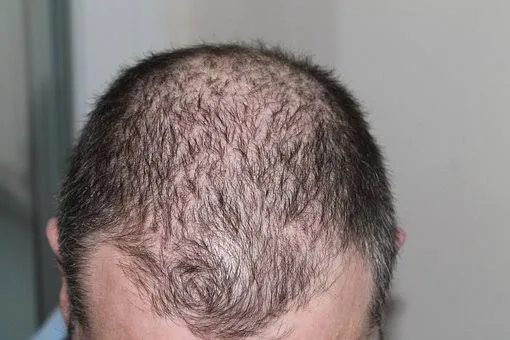
You notice your hair is thinner. The part is wider. The crown is see-through. You wonder if you are going bald. Usually it is the start of male pattern baldness. The good news is that early treatment works.
This guide explains why hair thins in men, what causes it, and what actually slows it down.
What Male Pattern Baldness Is
Male pattern baldness (androgenetic alopecia) is the most common cause of hair loss in men. It affects 50 percent of men by age 50. It can start as early as the late teens.
The pattern is predictable. The temples recede first. Then the crown thins. Then the top of the head. The hair on the back and sides remains.
Male pattern baldness is genetic. It is passed down from both parents. If your father or grandfather had it, you are more likely to have it.
The Role of DHT
DHT (dihydrotestosterone) is a hormone derived from testosterone. It is produced by an enzyme called 5-alpha reductase. DHT binds to receptors in hair follicles on the scalp.
In men with a genetic predisposition, DHT causes follicles to shrink (miniaturize). The hair becomes thinner and shorter with each growth cycle. Eventually, the follicle stops producing hair.
DHT does not affect all follicles. Follicles on the back and sides of the head are resistant to DHT. This is why hair loss follows a pattern (temples and crown) rather than being uniform.
The Genetics Problem
Genetics determine whether you are sensitive to DHT. The gene is passed down from both parents. If your father or grandfather had male pattern baldness, you are more likely to have it.
The timing and severity vary. Some men start losing hair at 18. Others at 40. Some lose it slowly over decades. Others lose it rapidly.
You cannot change your genetics. But you can slow the process.
Mature Hairline vs. Balding
A mature hairline is a natural change that happens in the late 20s. The temples recede slightly (1 to 2 centimeters). The hairline becomes more defined. This is not balding.
Male pattern baldness is different. The recession continues. The temples recede further. The crown thins. The hair becomes finer and lighter.
If your hairline has been stable for 2 to 3 years, it is likely a mature hairline. If it continues to recede, it is male pattern baldness.
What Actually Works
Two treatments are FDA-approved for male pattern baldness.
Minoxidil
Minoxidil is a topical solution or foam. It is applied to the scalp twice daily. It works by increasing blood flow to the follicles and prolonging the growth phase of the hair cycle.
Minoxidil does not block DHT. It stimulates growth. It works best on the crown and top of the head. It is less effective on the temples and hairline.
Results take 3 to 6 months. You must continue using it to maintain results. If you stop, the hair you gained falls out.
Side effects: scalp irritation, itching, and (rarely) unwanted facial hair growth.
Finasteride
Finasteride is an oral medication. It blocks 5-alpha reductase, the enzyme that converts testosterone to DHT. By reducing DHT, it slows or stops follicle miniaturization.
Finasteride is more effective than minoxidil for the hairline and temples. It works best when started early. It can maintain hair and sometimes regrow thinning areas.
Results take 3 to 6 months. You must continue taking it to maintain results. If you stop, DHT levels rise and hair loss resumes.
Side effects: decreased libido, erectile dysfunction, and (rarely) breast tenderness. These affect 1 to 2 percent of users. Most side effects resolve when the medication is stopped.
Combined Treatment
Using both minoxidil and finasteride is more effective than either alone. Minoxidil stimulates growth. Finasteride blocks DHT. Together, they address both sides of the problem.
What Does Not Work
- Biotin and hair vitamins: these only help if you are deficient. Most people are not.
- Hair growth shampoos: no shampoo has been proven to regrow hair. Some (with ketoconazole) may reduce DHT slightly on the scalp.
- Laser combs and helmets: low-level laser therapy has some evidence but is less effective than minoxidil or finasteride.
- Hair transplants: effective but expensive and invasive. They move hair from the back of the head to the front. They do not stop DHT.
The Timeline of Treatment
- Months 1 to 2: no visible change. You may see increased shedding (this is normal, the old hairs are making way for new ones).
- Months 3 to 4: shedding decreases. Hair may feel thicker.
- Months 6 to 12: visible improvement. The hairline may appear fuller.
- After 12 months: maximum results. Continued use maintains the gains.
If you do not see improvement after 12 months, the treatment may not be effective for you. See a dermatologist.
When to Start
Start treatment as soon as you notice thinning. Early treatment is more effective. Once follicles are completely dead, they cannot be revived. Minoxidil and finasteride can only save follicles that are still alive.
If you are unsure whether your hairline is receding, take photos every 3 months. Compare them. If the recession is progressing, start treatment.
Styling Tips for Thinning Hair
While treatment takes effect, styling can make thinning less noticeable.
- Shorter hair looks thicker. A buzz cut or short crop reduces the contrast between thick and thin areas.
- Avoid comb-overs. They draw attention to the thinning.
- Use a matte styling product. Shiny products make thinning more visible.
- Consider a textured crop. This adds volume and hides thinning.
Common Mistakes That Make It Worse
- Waiting too long. Early treatment is more effective. Start at the first sign of thinning.
- Stopping treatment. If you stop, the hair you gained falls out. Treatment is lifelong.
- Using unproven products. Biotin, shampoos, and supplements do not regrow hair.
- Ignoring the crown. Hair loss on the crown is harder to notice but progresses faster.
- Not seeing a dermatologist. A clinician can diagnose the type of hair loss and recommend treatment.
When to See a Dermatologist
See a dermatologist if you notice rapid hair loss. See one if you have patchy hair loss (which may be alopecia areata, an autoimmune condition). See one if over-the-counter treatments have not helped after 6 months. See one if you want to discuss finasteride (it requires a prescription).
Frequently Asked Questions
Is a receding hairline always male pattern baldness?
No. A mature hairline (slight temple recession in the late 20s) is normal. Male pattern baldness is progressive and continues over years. If your hairline has been stable for 2 to 3 years, it is likely a mature hairline.
Can I regrow a receded hairline?
Partially. Minoxidil and finasteride can thicken existing hair and sometimes regrow thin areas. They cannot regrow hair in areas where follicles are completely dead. Early treatment is key.
Does finasteride cause permanent side effects?
Rarely. Most side effects resolve when the medication is stopped. A small percentage of men report persistent side effects. Discuss risks with your clinician.
Are there natural alternatives to finasteride?
Saw palmetto is a natural DHT blocker. Evidence is limited but promising. It is less effective than finasteride. Some men use it as an alternative. Discuss with your clinician.
Hair thinning is progressive but treatable. Start minoxidil and finasteride early. Be patient (6 to 12 months). Continue treatment to maintain results. The earlier you start, the more hair you keep.