
Why Sheet Masks Don't Hydrate Your Skin (and the Occlusion Problem)
Sheet masks hydrate temporarily by occlusion. The effect lasts 1 to 2 hours. They do not add lasting hydration. Proper moisturizer works better.
Published
Sophia Chen
Senior Skincare & Ingredients Editor · Editor Bio → · How we research →
Our comprehensive library of ingredient breakdowns, product tests, and barrier protocols.
Key Takeaways
- Sheet masks hydrate temporarily by occlusion. The effect lasts 1 to 2 hours.
- They do not add lasting hydration. The water evaporates after removal.
- Proper moisturizer works better for lasting hydration.
- Sheet masks are a delivery system, not a treatment. They deliver whatever is in the serum.
- The "glow" from sheet masks is temporary. It is not a sign of improved skin health.
You apply a sheet mask. Your skin looks dewy and plump. An hour later, it looks normal. You wonder if the mask did anything. Usually it did, but not what you think.
This guide explains why sheet masks don't hydrate long-term, what they actually do, and how to use them correctly.
What a Sheet Mask Is
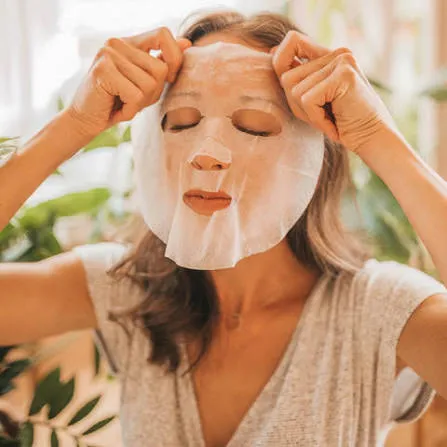
A sheet mask is a thin sheet (cotton, hydrogel, or bio-cellulose) soaked in a serum. The serum contains water, humectants (like hyaluronic acid), and sometimes actives (like vitamin C or niacinamide).
You apply the mask to your face. The sheet sits on the skin for 10 to 20 minutes. Then you remove it. The leftover serum is patted into the skin.
Sheet masks are popular in Korean skincare. They are marketed as a hydration boost. The marketing implies that the mask "forces" hydration into the skin.
How Sheet Masks Actually Work
Sheet masks work by occlusion. The sheet creates a barrier on the skin surface. This barrier prevents water from evaporating. The water in the serum (and the water already in the skin) stays on the surface.
This is the same principle as slugging (applying petroleum jelly). The mask occludes the skin. The skin holds onto water. The result is a plump, dewy look.
But the mask does not add water to the skin. It only prevents water from leaving. If your skin is dehydrated, the mask cannot hydrate it. It only traps whatever water is already there.
Why the Effect Is Temporary
The plump, dewy look from a sheet mask lasts 1 to 2 hours. After that, the water evaporates. The skin returns to its normal state.
This is because the mask does not change the skin's hydration level. It only occludes the surface. Once the occlusion is removed, the water evaporates. The skin is no different than before.
This is why sheet masks are a "quick fix" and not a treatment. They provide temporary plumping, not lasting hydration.
Cause One: Occlusion, Not Hydration
The mask occludes the skin. It does not hydrate it. The water in the serum sits on the surface. It does not penetrate the skin.
For lasting hydration, you need a humectant (like hyaluronic acid) that attracts water to the skin. And an occlusive (like petrolatum or shea butter) that seals it in. A sheet mask provides the humectant but not the occlusive.
The fix is to apply a moisturizer after the mask. The moisturizer seals the water in. This extends the hydration.
Cause Two: Too Much Water
Sheet mask serums are mostly water. Water alone does not hydrate the skin. It evaporates. Without humectants and occlusives, the water is useless.
Some sheet masks contain high concentrations of humectants (like hyaluronic acid). These attract water to the skin. But without an occlusive, the water evaporates.
The fix is to choose masks with humectants and apply a moisturizer after.
Cause Three: Not Sealing After
If you do not apply moisturizer after a sheet mask, the water evaporates. The skin returns to its normal state within 1 to 2 hours.
Apply a moisturizer within 3 minutes of removing the mask. This seals the water in. The hydration lasts longer.
Cause Four: Overuse
Using sheet masks daily can cause problems. The skin becomes dependent on the occlusion. When you stop using masks, the skin looks worse. This is not addiction. It is the removal of the occlusive effect.
Use sheet masks 1 to 2 times a week. Not daily. Daily use can also cause irritation from the serum ingredients.
The Different Types of Sheet Masks
Not all sheet masks are equal. The material affects how well the mask works.
- Cotton: the most common. Absorbs serum well. Affordable. Can dry out during use.
- Hydrogel: gel-like. Adheres to the skin better. More expensive. Stays moist longer.
- Bio-cellulose: derived from bacteria. Very thin and adherent. Most expensive. Best fit.
- Microfiber: soft and thin. Good absorption. Moderate price.
Cotton masks are fine for most people. Hydrogel and bio-cellulose masks are better but cost more. The material does not affect the hydration. The serum does.
How to Choose a Sheet Mask
Choose a sheet mask based on the serum ingredients, not the marketing.
- For hydration: look for hyaluronic acid, glycerin, or ceramides.
- For brightening: look for vitamin C, niacinamide, or tranexamic acid.
- For soothing: look for centella asiatica, aloe vera, or panthenol.
- For anti-aging: look for peptides, retinol, or adenosine.
Avoid masks with high concentrations of alcohol or fragrance. These can irritate the skin.
What Sheet Masks Actually Do
Sheet masks do three things.
- Temporary plumping: the occlusion traps water. The skin looks plump and dewy for 1 to 2 hours.
- Delivery of actives: the serum contains actives (vitamin C, niacinamide, etc.). These may have a mild effect. But the concentration is low.
- Relaxation: the 10 to 20 minutes of masking is relaxing. This has psychological benefits.
Sheet masks do not.
- Add lasting hydration.
- Improve skin health.
- Reduce wrinkles or dark spots.
- Replace moisturizer.
What Works Better for Hydration
For lasting hydration, use these instead.
- Hyaluronic acid serum: applied to damp skin. Attracts water. Sealed with moisturizer.
- Moisturizer: contains humectants, emollients, and occlusives. Seals moisture in.
- Overnight mask: a thick, occlusive mask applied at night. Seals moisture while you sleep.
- Humidifier: adds moisture to the air. Reduces water loss from the skin.
These methods provide lasting hydration. Sheet masks provide temporary plumping.
How to Use a Sheet Mask Correctly
- Cleanse with a gentle cleanser.
- Pat dry. Leave skin slightly damp.
- Apply the mask. Smooth it onto the skin.
- Leave on for 10 to 15 minutes. Not 20 to 30. Longer is not better.
- Remove the mask. Pat the leftover serum into the skin.
- Apply moisturizer within 3 minutes. This seals the water in.
- Use 1 to 2 times a week. Not daily.
Common Mistakes That Make It Worse
- Leaving the mask on too long. 10 to 15 minutes is enough. Longer causes dryness (the mask dries and pulls water from the skin).
- Not applying moisturizer after. The water evaporates. Apply moisturizer to seal.
- Using daily. 1 to 2 times a week is enough. Daily use can irritate.
- Not cleansing before. Apply to clean skin. Dirty skin blocks absorption.
- Reusing the mask. This is unhygienic. Use once and discard.
When to See a Dermatologist
See a dermatologist if sheet masks cause irritation, redness, or breakouts. See one if your skin is very dry or sensitive. See one if you are unsure which products to use.
A dermatologist can recommend products and techniques tailored to your skin.
Frequently Asked Questions
Do sheet masks actually hydrate?
Temporarily. The occlusion traps water. The effect lasts 1 to 2 hours. For lasting hydration, use a moisturizer.
How often should I use a sheet mask?
1 to 2 times a week. Not daily. Daily use can irritate the skin.
Can I use a sheet mask every day?
No. Daily use can cause irritation and dependency. The skin becomes reliant on the occlusion. Use 1 to 2 times a week.
Are sheet masks better than moisturizer?
No. Moisturizer provides lasting hydration. Sheet masks provide temporary plumping. Use moisturizer daily. Use sheet masks occasionally.
Sheet masks are a temporary plumping tool, not a hydration treatment. The occlusion traps water. The effect lasts 1 to 2 hours. For lasting hydration, use a moisturizer. The glow is temporary. The health is real.