
Can Eye Cream Cause Milia? Why It Happens and What to Do
Published
Short answer
Yes. Rich, occlusive eye creams can contribute to milia, the tiny hard white bumps under the eyes, by trapping keratin in the thin skin there. Using too much or pressing it close to the lash line makes it more likely. Switch to a lighter gel or lotion and use a rice-grain amount. Don't squeeze milia; a dermatologist or esthetician can remove them safely.
Sophia Chen
Senior Skincare & Ingredients Editor · Editor Bio → · How we research →
Fragrance-free, low-pH tested formulations designed to calm and restore reactive skin.
Key Takeaways
- Milia are small white bumps caused by trapped keratin (a protein) under the skin.
- Heavy eye creams and over-application cause milia by trapping keratin under the skin.
- The skin around the eyes is thin and does not absorb heavy products well.
- Using less product and lighter formulas prevents milia.
- Milia are not acne. They do not respond to acne treatments. They need extraction or time.
You apply eye cream. Small white bumps appear under your eyes. You assume it is acne. You apply more product. The bumps get worse. The problem is not the eye cream. It is how much and what type you use.
This guide explains why eye cream causes milia, what milia are, and how to fix it.
What Milia Are
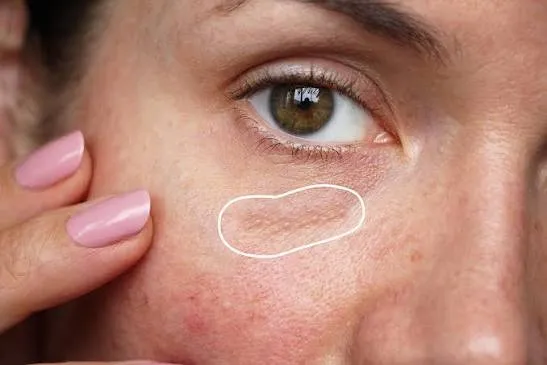
Milia are small, white or yellowish bumps on the skin. They are 1 to 2 mm in size. They are firm and smooth. They do not hurt or itch. They are not inflamed.
Milia are caused by trapped keratin (a protein found in skin, hair, and nails). Keratin builds up under the skin surface. It forms a small cyst. The cyst is trapped because the skin is too thick or too occluded for it to escape.
Milia are not acne. Acne is caused by clogged pores and bacteria. Milia are caused by trapped keratin. They do not respond to acne treatments (salicylic acid, benzoyl peroxide).
Why Eye Cream Causes Milia
Eye cream causes milia for three reasons.
1. Heavy Formulas
Heavy eye creams contain occlusives (petrolatum, shea butter, beeswax) and emollients (oils, butters). These ingredients form a barrier on the skin surface. They trap keratin under the skin.
The skin around the eyes is thin (0.5 mm). It does not absorb heavy products well. The product sits on top. The keratin cannot escape. Milia form.
2. Over-Application
Applying too much eye cream causes milia. The skin can only absorb so much. Excess product sits on the surface and traps keratin.
A pea-sized amount is enough for both eyes. More than that causes milia.
3. Layering Multiple Products
Layering eye cream, serum, and concealer under the eyes traps keratin. Multiple layers create a thick barrier. The keratin cannot escape.
Use one product under the eyes. Not three. Simplify the routine.
Cause One: Heavy Eye Cream
Heavy eye creams are the most common cause of milia. They contain occlusives that trap keratin.
The fix is to switch to a lighter formula. Look for gel or serum-based eye creams. These absorb faster and do not trap keratin.
Avoid eye creams with petrolatum, shea butter, or beeswax as the main ingredient. These are too heavy for the thin eye skin.
Cause Two: Over-Application
Applying too much eye cream causes milia. The skin cannot absorb the excess. It sits on the surface and traps keratin.
Use a pea-sized amount for both eyes. Apply with your ring finger (the weakest finger). Pat gently. Do not rub. Less is more.
If milia persist, reduce the amount. Use half a pea-sized amount. Or apply every other day instead of daily.
Cause Three: Not Cleansing Properly
If you do not cleanse the under-eye area thoroughly, product builds up. This buildup traps keratin and causes milia.
Cleanse the under-eye area gently every night. Use a mild, pH-balanced cleanser. Do not scrub. Pat dry.
If you wear eye makeup, use a gentle makeup remover. Remove all product before cleansing.
Cause Four: Skin Type
Some skin types are more prone to milia. Oily skin and combination skin produce more sebum. Sebum traps keratin. Dry skin has a thicker stratum corneum (outer layer). This traps keratin more easily.
If you are prone to milia, use lighter products. Avoid heavy creams and oils. Use gel or serum-based formulas.
The Role of Skin Type
Different skin types are prone to milia for different reasons.
- Oily skin: produces excess sebum. Sebum traps keratin. Use lightweight, oil-free products.
- Dry skin: has a thicker stratum corneum. This traps keratin. Use gentle exfoliation and light moisturizers.
- Combination skin: oily T-zone, dry cheeks. Use different products on different areas.
- Sensitive skin: prone to irritation. Irritation thickens the skin. Use gentle, fragrance-free products.
If you are prone to milia, identify your skin type and choose products accordingly. A dermatologist can help.
How to Prevent Milia
- Use a light eye cream. Gel or serum-based. Avoid heavy creams.
- Use less product. A pea-sized amount for both eyes.
- Cleanse properly. Remove all product every night.
- Exfoliate gently. Once a week with a mild chemical exfoliant.
- Do not layer multiple products. Use one product under the eyes.
- Avoid heavy occlusives. No petrolatum or shea butter on the eye area.
How to Treat Milia
Milia are not harmful. They are cosmetic. They often resolve on their own in 1 to 2 months. But you can speed up the process.
1. Stop Using Heavy Eye Cream
Switch to a lighter formula. Or stop using eye cream altogether. Use a gentle face moisturizer around the eyes instead.
2. Exfoliate Gently
Mild exfoliation can help milia resolve. Use a gentle chemical exfoliant (lactic acid or glycolic acid) around the eyes. Apply once a week. Do not scrub.
Avoid physical exfoliants (scrubs, brushes) around the eyes. The skin is too thin. Physical exfoliation causes irritation.
3. Use a Retinol
Retinol (vitamin A) increases cell turnover. This helps milia resolve faster. Use a low concentration (0.25 percent) around the eyes. Start once a week. Build slowly.
Retinol is the most effective over-the-counter treatment for milia.
4. Professional Extraction
If milia persist, see a dermatologist or esthetician. They can extract milia with a sterile needle. The procedure is quick and painless. It leaves no scar.
Do not extract milia at home. This causes infection and scarring.
The Right Eye Care Routine
Morning:
- Cleanse with a gentle cleanser.
- Apply a light eye cream or serum (pea-sized amount).
- Wait 1 minute.
- Apply sunscreen.
Evening:
- Remove eye makeup with a gentle remover.
- Cleanse with a gentle cleanser.
- Apply a light eye cream or serum (pea-sized amount).
- Wait 1 minute.
- Apply moisturizer (optional, if skin is dry).
Use one product under the eyes. Not three. Simplify.
Common Mistakes That Make It Worse
- Using heavy eye cream. Switch to gel or serum.
- Applying too much. Use a pea-sized amount.
- Layering multiple products. Use one.
- Not cleansing properly. Cleanse every night.
- Picking at milia. This causes infection and scarring.
- Using acne treatments. Milia are not acne. Salicylic acid and benzoyl peroxide do not help.
When to See a Dermatologist
See a dermatologist if milia persist for more than 2 months. See one if you have many milia. See one if you want professional extraction. See one if you have milia on other areas (cheeks, forehead).
A dermatologist can extract milia safely and recommend products to prevent recurrence.
Frequently Asked Questions
Are milia harmful?
No. Milia are cosmetic. They are not painful, itchy, or infectious. They are a buildup of keratin, not a disease.
Can I pop milia at home?
No. Popping milia at home causes infection and scarring. See a dermatologist or esthetician for professional extraction.
How long do milia last?
Milia often resolve on their own in 1 to 2 months. With treatment (retinol, exfoliation), they resolve faster. Professional extraction is immediate.
Does eye cream always cause milia?
No. Heavy eye creams and over-application cause milia. Light formulas and proper amounts do not. If you are prone to milia, use gel or serum-based eye creams.
Milia are caused by trapped keratin under heavy eye cream. Switch to a lighter formula. Use less product. Cleanse properly. The milia resolve, and the under-eye area stays smooth.