
Why Stretch Marks Don't Fade (and the Treatment That Actually Works)
Stretch marks don't fade because they are structural scars, not surface discoloration. Retinol, microneedling, and laser help but cannot erase them completely.
Published
Marcus Vance
Fabric Longevity & Grooming Editor · Editor Bio → · How we research →
Our comprehensive library of ingredient breakdowns, product tests, and barrier protocols.
Key Takeaways
- Stretch marks are scars, not surface discoloration. They form when skin stretches faster than it can grow.
- Fresh stretch marks (red/purple) can be treated. Old stretch marks (white/silver) are harder to treat.
- Topicals (creams, oils) cannot erase stretch marks. They may improve texture slightly.
- Retinol, microneedling, and laser are the only treatments with evidence. Results are modest.
- 90 percent of pregnant women get stretch marks. They are normal, not a flaw.
You have stretch marks. You apply cream daily. They don't fade. You wonder if the cream is bad. Usually the problem is not the cream. Stretch marks are scars, not surface discoloration.
This guide explains what stretch marks are, why creams fail, and what actually helps.
What Stretch Marks Are
Stretch marks (striae distensae) are scars that form when skin stretches faster than it can grow. The dermis (the middle layer of skin) tears. Collagen and elastin fibers break. The skin heals with scar tissue.
Stretch marks go through two phases.
- Striae rubrae (red/purple): fresh stretch marks. The skin is inflamed. Blood vessels are visible. They may itch or burn.
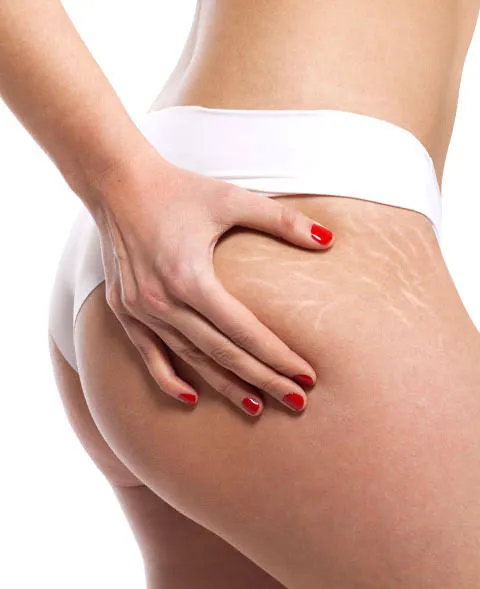
- Striae albae (white/silver): old stretch marks. The inflammation has resolved. The skin is thin and atrophic (sunken). They are permanent.
Fresh stretch marks (red/purple) are easier to treat. Old stretch marks (white/silver) are harder. But neither can be completely erased.
Why Creams Don't Work
Stretch mark creams claim to "reduce the appearance of stretch marks." They contain ingredients like vitamin E, cocoa butter, and centella asiatica. These ingredients may moisturize and improve skin texture. But they cannot repair scar tissue.
Scar tissue is different from normal skin. It lacks the organized collagen structure of normal skin. No cream can rebuild this structure. The scar remains.
No topical product has been proven to erase stretch marks in clinical trials. The FDA has not approved any topical treatment for stretch marks.
What Creams Actually Do
Stretch mark creams may do three things.
- Moisturize: plump the skin slightly. This makes stretch marks less visible. The effect is cosmetic, not structural.
- Reduce inflammation: in fresh (red) stretch marks, anti-inflammatory ingredients may reduce redness. The effect is modest.
- Massage: applying cream involves massage. Massage increases blood flow. The effect is temporary.
These effects are real but temporary. They do not change the underlying scar tissue.
The Role of Genetics
Genetics determine whether you get stretch marks and how severe they are.
- Skin elasticity: some people have more elastic skin. They are less prone to stretch marks.
- Collagen production: some people produce more collagen. Their skin repairs faster.
- Hormones: hormonal changes (pregnancy, puberty, weight gain) affect skin elasticity and collagen.
- Family history: if your mother has stretch marks, you are more likely to have them.
You cannot change your genetics. But you can manage the factors you control (weight, hydration, skin care).
The Role of Weight Changes
Rapid weight changes cause stretch marks. The skin stretches faster than it can grow. Gradual weight changes allow the skin to adapt.
- Pregnancy: the most common cause. The belly grows rapidly. 90 percent of pregnant women get stretch marks.
- Puberty: growth spurts stretch the skin. Common on the thighs, hips, and breasts.
- Weight gain: rapid weight gain stretches the skin. The thighs, hips, and stomach are most affected.
- Weight loss: rapid weight loss can also cause stretch marks. The skin loses elasticity and tears.
Gradual weight changes (1 to 2 pounds per week) reduce the risk. Rapid changes (5+ pounds per week) increase it.
How to Minimize the Appearance
While you cannot erase stretch marks, you can make them less visible.
- Keep skin hydrated. Well-hydrated skin is more elastic. It is less likely to tear. Moisturize daily, especially during pregnancy or weight changes.
- Maintain a healthy weight. Rapid weight gain or loss stretches the skin. Gradual changes allow the skin to adapt.
- Use sunscreen. UV darkens stretch marks. Use SPF 30+ on exposed areas. This prevents them from becoming more visible.
- Massage. Gentle massage increases blood flow. This may improve skin texture. Use a moisturizer or oil. Massage for 2 to 3 minutes daily.
- Eat a balanced diet. Protein, vitamin C, and zinc support collagen production. These nutrients help the skin repair.
What Actually Works
1. Retinol (0.3 Percent)
Retinol (vitamin A) increases cell turnover and stimulates collagen. It may improve the texture of stretch marks. Studies show modest improvement in fresh stretch marks.
Use a 0.3 percent retinol cream on stretch marks. Apply nightly. Results take 3 to 6 months. Do not use during pregnancy.
2. Microneedling
Microneedling creates micro-injuries in the skin. This stimulates collagen production. It can improve the texture of stretch marks.
Results take 3 to 6 sessions. Spaced 4 to 6 weeks apart. The effect is modest. Stretch marks are less visible but not gone.
3. Laser
Fractional laser (like Fraxel) resurfaces the skin and stimulates collagen. It can improve the texture and color of stretch marks.
Results take 3 to 5 sessions. The effect is modest. Stretch marks are less visible but not gone.
4. Tretinoin (Prescription)
Tretinoin (retinoic acid) is stronger than retinol. It increases cell turnover and stimulates collagen. It may improve fresh stretch marks.
Use 0.025 to 0.1 percent. Apply nightly. Results take 3 to 6 months. Do not use during pregnancy.
What Does Not Work
- Bio-oil: contains vitamin E and plant oils. No clinical evidence for stretch marks.
- Cocoa butter: moisturizes but does not repair scar tissue.
- Vitamin E: no evidence for stretch marks. May cause contact dermatitis.
- Silicone gel: helps surgical scars. Not proven for stretch marks.
- Home remedies (lemon juice, aloe vera, coconut oil): no evidence.
The Role of Exercise
Exercise does not remove stretch marks. But it can reduce their appearance.
Building muscle fills the space under the skin. This smooths the surface and makes stretch marks less visible. Exercise also reduces body fat, which reduces the pressure on the skin.
Focus on strength training for the areas with stretch marks. This builds muscle and improves skin tone.
Common Mistakes That Make It Worse
- Buying expensive creams. They do not work. Save your money.
- Expecting creams to erase scars. Creams cannot repair scar tissue.
- Not using sunscreen. UV darkens stretch marks. Use SPF on exposed areas.
- Picking at stretch marks. This causes more damage.
- Not being patient. Treatments take 3 to 6 months.
When to See a Dermatologist
See a dermatologist if stretch marks bother you significantly. See one if you want to discuss procedures (microneedling, laser, tretinoin). See one if you want a realistic assessment of your options.
A dermatologist can recommend treatments based on your skin type and budget.
Frequently Asked Questions
Do stretch mark creams work?
No. No topical product has been proven to erase stretch marks. Creams may temporarily improve texture. But they cannot repair scar tissue.
Can stretch marks be removed?
No. They can be improved (less visible) with procedures. But they cannot be completely erased. They are permanent scars.
Are stretch marks genetic?
Yes. Genetics determine skin elasticity and collagen production. If your mother has stretch marks, you are more likely to have them.
Do stretch marks fade over time?
Yes, partially. Fresh (red/purple) stretch marks fade to white/silver over 6 to 12 months. But they do not disappear. They become less noticeable but remain.
Stretch marks are scars, not surface discoloration. Creams cannot fix them. Retinol, microneedling, and laser help modestly. But stretch marks are normal. 90 percent of pregnant women get them. They are not a flaw.