
Why Your Curling Iron Creates a Flat Spot, Not a Curl: The Heat + Tension Fix
A flat spot means the hair was clamped while the cortex was at the glass-transition temperature; tension released during cooling locked the flat shape instead of the curl.
Published · Updated
Marcus Vance
Fabric Longevity & Grooming Editor · Editor Bio → · How we research →
Our comprehensive library of ingredient breakdowns, product tests, and barrier protocols.
Key Takeaways
- A flat spot means the hair was clamped in the flatiron configuration while the cortex was at its glass-transition temperature (150-185C), so the hydrogen bonds reformed in the flattened position.
- Curl memory is set during cooling: if the curl isn't under consistent tension while the cortex re-solidifies, gravity and the clamp's own weight flatten it into the clamp mark.
- The fix is tension + release timing: clamp for 3 seconds, release, then immediately re-clamp with the curl cupped in your fingers during the cool-down to hold the shape as the cortex re-solidifies.
- Heat-setting without tension is just heat — the iron can be at 200C and still leave a flat spot if the curl wasn't held.
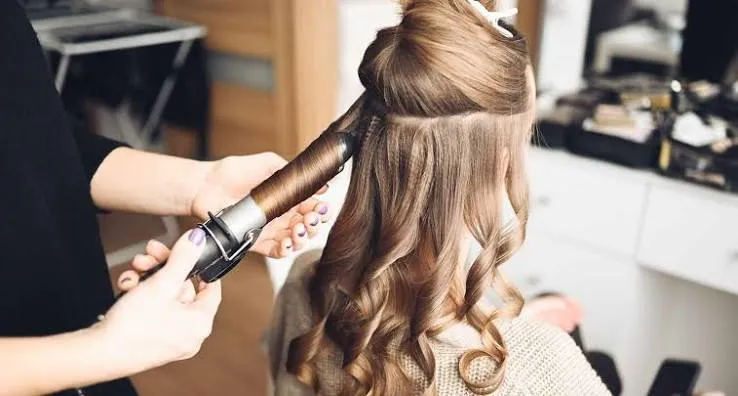
You clamp your curling iron around a section and release to find a perfect curl — then five minutes later it's a flat ribbon pressed right where the clamp sat. The curl didn't fall. The clamp shaped it flat, and the heat set it that way.
On r/Haircurling and r/curlyhair, "flat spot instead of curl" posts dominate, and the advice is always "use higher heat" or "let it cool" — which treats the symptom. The real issue is tension release timing.
Why Heat + Clamp = Flat
Hair's curl memory is set by hydrogen bonds in the cortex, which break at 150-185C (the glass-transition range) and reform as they cool. If the hair is held clamped in that window, the bonds reform in whatever position the clamp left it — and the clamp's weight flattens most strands.
The flat spot is literally the imprint of the clamp, frozen by the cooling cortex. The curl you saw for 3 seconds was a heat mirage — the bonds hadn't reformed yet.
The Tension + Release Fix
- Clamp 3 seconds, release immediately. Don't hold the curl on the iron until it "cools" — holding heat without tension just sets the flat clamp imprint.
- Cup and hold during cool-down. After release, cup the curl in your fingers and hold it in its circular position for 15-20 seconds as the cortex re-solidifies. This sets the hydrogen bonds in the curl shape, not the clamp shape.
- Work in sections with direction. Each curl should be wrapped away from the face and held cupped until cool — the direction is part of the tension memory.
A hairnet or silk scarf over the curls during the cool-down prevents gravity from pulling them flat before the bonds lock.
why-curling-iron-needs-titanium-not-ceramic texturizing-iron-vs-flatiron-curling
Frequently Asked Questions
Should I use a lower heat setting?
Yes, if your hair is fine — 150C is enough to set hydrogen bonds. Higher heat just risks the flat imprint if you hold too long without tension.
Why do my curls fall but my friend's hold?
Your hair type may need a smaller barrel (tighter radius = more tension per curl) or a different section size. Fine hair needs 13mm barrels; thick hair needs 19mm.
Should I pin the curls after release?
Yes — clip each curl up against the scalp while it cools. This prevents gravity from stretching it flat as the bonds reform.
Your curling iron leaves a flat spot, not a curl, because the hair cooled and re-set in the flattened clamp position — heat without tension. Clamp 3 seconds, release, then cup and hold the curl during cool-down to set the hydrogen bonds in the right shape.