
Why Azelaic Acid Isn't Working (and the Rosacea Connection)
Azelaic acid works for redness, acne, and pigmentation but needs 8 to 12 weeks. It is gentler than retinol but still requires patience and proper use.
Published
Sophia Chen
Senior Skincare & Ingredients Editor · Editor Bio → · How we research →
Fragrance-free, low-pH tested formulations designed to calm and restore reactive skin.
Key Takeaways
- Azelaic acid reduces redness, acne, and hyperpigmentation. It is gentler than retinol but still needs 8 to 12 weeks.
- It is not a retinoid. It does not speed up cell turnover. It works through anti-inflammatory and antibacterial pathways.
- Azelaic acid does not purge like retinoids. If you are "purging," you are likely irritated.
- It is safe for sensitive skin, rosacea, and pregnancy. It is one of the few actives that is.
- Prescription strength (15 to 20 percent) is stronger than over-the-counter (10 percent). See a clinician if 10 percent is not enough.
You bought azelaic acid. You used it for a month. Your skin looks the same. You wonder if it is just hype. Usually it is not. The timeline, the concentration, or your expectations are the problem.
This guide explains what azelaic acid actually does, why it fails for some people, and how to use it correctly.
What Azelaic Acid Is
Azelaic acid is a dicarboxylic acid. It is found naturally in grains (wheat, rye, barley). It is produced by yeast that lives on normal skin. It is not an AHA or BHA. It does not exfoliate. It works through different pathways.
Azelaic acid has four proven effects.
- Anti-inflammatory: it reduces redness and inflammation. This makes it effective for rosacea and acne.
- Antibacterial: it kills Cutibacterium acnes (the bacteria that cause acne). It is less effective than benzoyl peroxide but gentler.
- Keratolytic: it normalizes skin cell turnover. It prevents clogged pores by keeping cells from sticking together.
- Tyrosinase inhibitor: it reduces melanin production. This lightens hyperpigmentation (dark spots) and post-inflammatory marks.
Azelaic acid is one of the few actives that is safe for sensitive skin, rosacea, and pregnancy. It is often recommended by dermatologists for these conditions.
What Azelaic Acid Does Not Do
Azelaic acid is not a retinoid. It does not speed up cell turnover. It does not stimulate collagen. It does not reduce fine lines or wrinkles.
It is also not a strong exfoliant. It does not remove dead skin cells like glycolic or salicylic acid. It is a maintenance and treatment ingredient, not an exfoliant.
If your main concern is aging or deep wrinkles, azelaic acid will not help. You need retinol or tretinoin.
The Concentration Problem
Over-the-counter azelaic acid is typically 10 percent. Prescription strength is 15 to 20 percent (Finacea, Azelex).
10 percent is effective for mild acne, redness, and pigmentation. But it is less potent than prescription strength. If 10 percent is not enough after 12 weeks, you may need prescription strength.
10 percent azelaic acid is also less irritating than prescription strength. This makes it a good starting point for sensitive skin.
The "Purge" Myth
Some people report "purging" with azelaic acid. This is misleading. Azelaic acid does not accelerate cell turnover like retinoids. It does not push hidden clogs to the surface.
If you break out after starting azelaic acid, it is likely irritation, not purging. Azelaic acid can cause initial redness, stinging, or breakouts in sensitive skin. This is a reaction, not a purge.
If you break out, reduce frequency. Use it every other day instead of daily. Or apply a thinner layer. If irritation persists, stop and reassess.
The Rosacea Connection
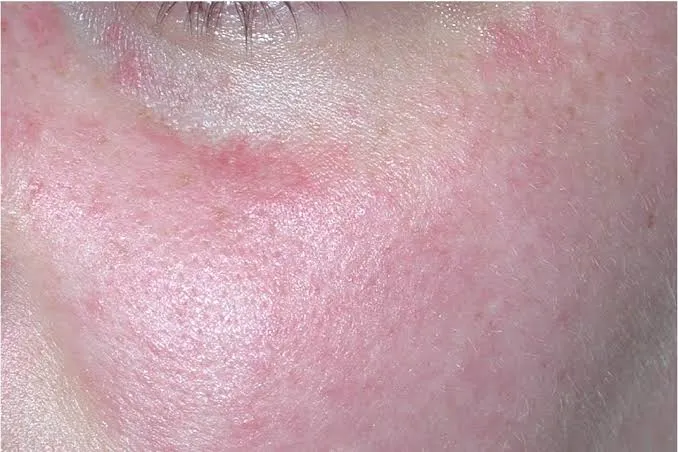
Azelaic acid is one of the most effective treatments for rosacea. Rosacea is a skin condition that causes redness, flushing, and visible blood vessels. It is often mistaken for acne.
Azelaic acid reduces the inflammation and redness associated with rosacea. It is FDA-approved for rosacea (as Finacea 15 percent gel). It is gentler than metronidazole (another rosacea treatment) and has fewer side effects.
If you have persistent redness, flushing, or visible blood vessels, you may have rosacea. See a dermatologist for diagnosis. Azelaic acid may be part of the treatment.
How Azelaic Acid Compares to Other Actives
- vs. Retinol: Azelaic acid is gentler. It does not cause purging or peeling. But it is less effective for aging and texture. Use retinol for anti-aging. Use azelaic acid for acne, redness, and pigmentation.
- vs. Salicylic acid: Salicylic acid exfoliates and unclogs pores. Azelaic acid is anti-inflammatory and antibacterial. Salicylic acid is better for blackheads. Azelaic acid is better for red, inflamed acne.
- vs. Benzoyl peroxide: Benzoyl peroxide kills bacteria more effectively. But it is more irritating. Azelaic acid is gentler and also reduces pigmentation.
- vs. Niacinamide: Both are gentle and anti-inflammatory. Niacinamide is better for oil control and barrier repair. Azelaic acid is better for acne and pigmentation.
The Timeline
Azelaic acid takes 8 to 12 weeks to show results. This is longer than many actives.
- Weeks 1 to 2: possible redness or stinging. This is normal. It subsides.
- Weeks 3 to 4: skin may look smoother. Redness may decrease slightly.
- Weeks 5 to 8: acne may decrease. Pigmentation may lighten.
- Weeks 8 to 12: full results. Redness, acne, and pigmentation have improved.
If you have used azelaic acid for 4 weeks and see nothing, that is normal. Give it 12 weeks before judging.
How to Use Azelaic Acid Correctly
- Start slowly. Use once every other day for 2 weeks. Build to daily.
- Apply to clean, dry skin. Azelaic acid is not pH-dependent. It works on dry skin.
- Use a pea-sized amount. Apply to the whole face or affected areas.
- Wait 1 to 2 minutes. Let it absorb.
- Apply moisturizer. Azelaic acid can be drying. Moisturizer helps.
- Use sunscreen. Azelaic acid does not increase photosensitivity, but sunscreen is always recommended.
- Be patient. Give it 8 to 12 weeks.
When to Use Azelaic Acid
Azelaic acid can be used morning or night. It is stable and does not degrade in sunlight. It is compatible with most other ingredients.
- Morning: apply azelaic acid, then moisturizer, then sunscreen.
- Night: apply azelaic acid, then moisturizer. Or use it on nights you do not use retinol.
Azelaic acid is compatible with vitamin C, niacinamide, and hyaluronic acid. It can be layered with these.
It is less compatible with strong acids (glycolic, salicylic) and retinol. Using them together increases irritation. Alternate nights.
Common Mistakes That Make It Worse
- Expecting fast results. Give it 8 to 12 weeks.
- Using too much. A pea-sized amount is enough.
- Applying to wet skin. Apply to dry skin.
- Mixing with strong acids or retinol. Alternate nights.
- Giving up too soon. The timeline is long but the results are real.
- Using it for aging. It does not reduce wrinkles or stimulate collagen.
When to See a Dermatologist
See a dermatologist if 10 percent azelaic acid has not helped after 12 weeks. See one if you have rosacea (persistent redness, flushing, visible blood vessels). See one if you have severe acne or significant hyperpigmentation. See one if you want prescription strength (15 to 20 percent).
A dermatologist can prescribe stronger formulations and recommend complementary treatments.
Frequently Asked Questions
Does azelaic acid purge?
No. Azelaic acid does not accelerate cell turnover. It does not push hidden clogs to the surface. If you break out, it is irritation, not purging.
Is azelaic acid safe for sensitive skin?
Yes. It is one of the gentlest actives. It is often recommended for sensitive skin, rosacea, and pregnancy. Start slowly and build up.
Can I use azelaic acid with retinol?
Yes, but not on the same night. Use azelaic acid on nights you do not use retinol. This reduces irritation.
Is azelaic acid good for dark spots?
Yes. It inhibits tyrosinase (the enzyme that produces melanin). It lightens hyperpigmentation and post-inflammatory marks. Results take 8 to 12 weeks.
Azelaic acid is a gentle, versatile active. It works for redness, acne, and pigmentation. Give it 8 to 12 weeks. Use it correctly. The results are real and long-lasting.